

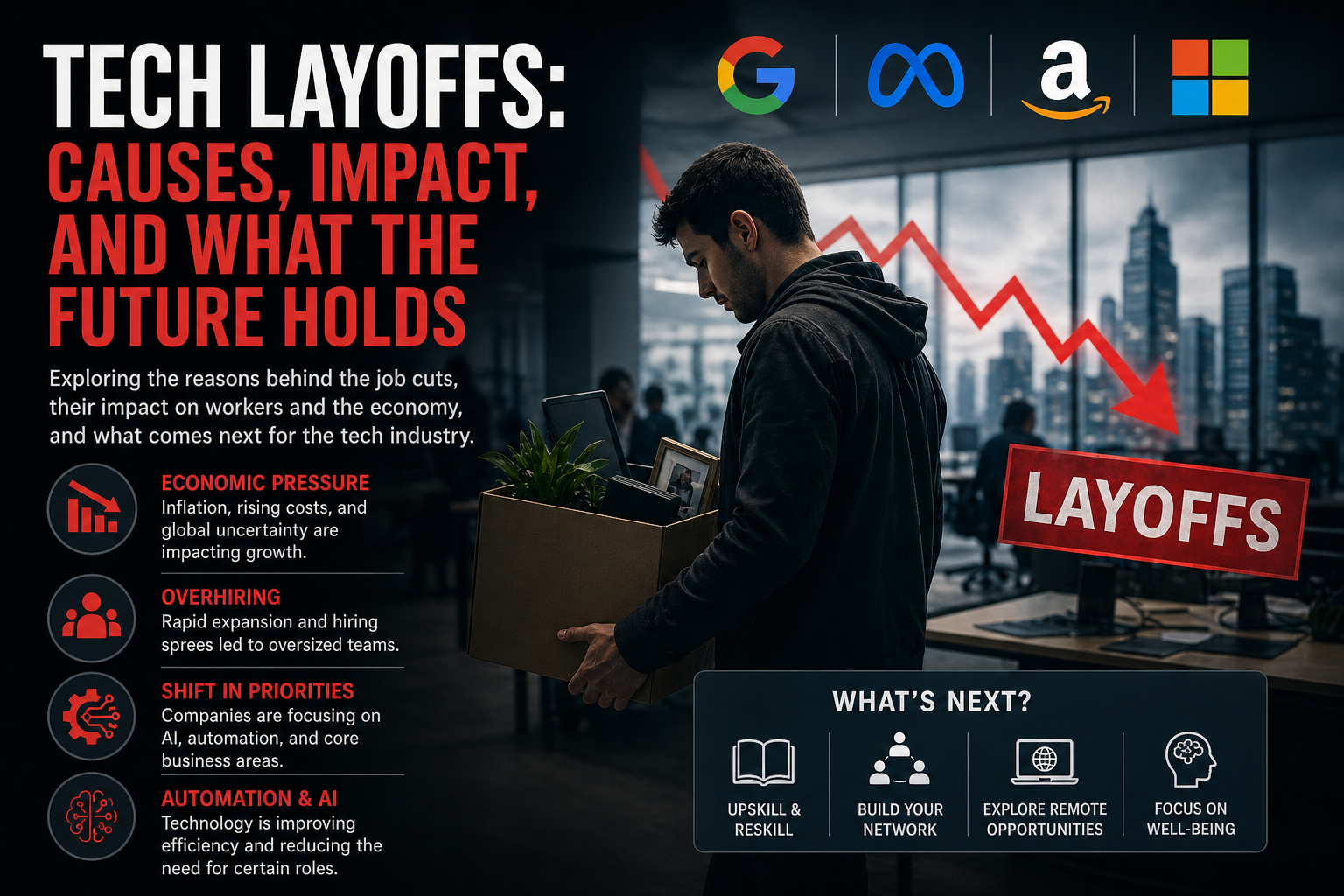
The term “tech layoffs” has become increasingly common in global headlines, reflecting a major shift in the technology industry. Once known for rapid hiring, high salaries, and seemingly endless growth, the tech sector has recently experienced waves of job cuts affecting thousands of employees worldwide.
This article explores the reasons behind tech layoffs, their impact on workers and the economy, and what the future might look like for the industry.
What Are Tech Layoffs?
Tech layoffs refer to the large-scale reduction of employees in technology companies. These layoffs can occur in startups, mid-sized firms, or global giants such as Google, Meta, Amazon, and Microsoft.
Unlike normal employee turnover, layoffs are usually driven by strategic decisions such as cost-cutting, restructuring, or shifts in market demand.
Major Causes of Tech Layoffs
1. Overhiring During Growth Periods
During times of rapid expansion—especially around the COVID-19 pandemic—many tech companies hired aggressively. As digital services surged, businesses anticipated long-term growth. However, when demand stabilized, companies found themselves with more employees than needed.
2. Economic Slowdown
Global economic uncertainty plays a major role in layoffs. Factors such as inflation, rising interest rates, and reduced consumer spending have forced companies to tighten budgets and reduce operational costs.
3. Shift in Business Priorities
Tech companies frequently pivot to new areas like artificial intelligence, cloud computing, or automation. This often leads to restructuring, where some roles become redundant while others are prioritized.
For example, companies investing heavily in AI may reduce roles in less strategic departments.
4. Pressure from Investors
Public companies are under constant pressure to maintain profitability and shareholder confidence. When revenue growth slows, layoffs are often used to quickly improve financial performance.
5. Automation and Efficiency Improvements
Advancements in automation and AI are enabling companies to do more with fewer employees. While this increases efficiency, it also reduces the need for certain roles, particularly in operations and support functions.
Impact of Tech Layoffs
1. Effects on Employees
The most immediate impact is on workers who lose their jobs. This can lead to:
- Financial stress
- Career uncertainty
- Mental health challenges
However, many laid-off tech workers possess valuable skills, making it easier for them to find new opportunities compared to other industries.
2. Industry-Wide Ripple Effects
Layoffs don’t just affect individuals—they influence the entire tech ecosystem:
- Reduced consumer confidence in tech companies
- Slower innovation in some areas
- Increased competition for available jobs
3. Startup Opportunities
Interestingly, layoffs often lead to a rise in entrepreneurship. Former employees may launch startups, bringing fresh ideas and innovation into the market.
4. Regional Economic Impact
Cities heavily dependent on tech jobs—such as Silicon Valley, London, and Bangalore—can feel the effects of mass layoffs through reduced spending and economic slowdown.
Tech Layoffs in Recent Years
In recent years, thousands of employees have been laid off across major tech firms. Companies like Meta and Amazon have announced significant workforce reductions, citing economic conditions and strategic realignment.
Even historically stable companies like Microsoft and Google have implemented layoffs, signaling that no company is entirely immune.
How Workers Can Respond
1. Upskilling and Reskilling
Learning new skills—especially in high-demand areas like AI, cybersecurity, and data science—can improve job prospects.
2. Networking
Building strong professional connections can help individuals discover new opportunities more quickly.
3. Exploring Freelance or Remote Work
The rise of remote work has created global opportunities, allowing tech professionals to work for companies across different countries.
4. Mental Health Awareness
Coping with job loss can be challenging. Seeking support from friends, family, or professionals is important during transitions.
The Future of the Tech Industry
Despite current layoffs, the long-term outlook for the tech industry remains strong. Technology continues to play a central role in nearly every aspect of modern life, from communication to healthcare and education.
Key trends shaping the future include:
- Artificial Intelligence and Machine Learning
- Cloud Computing
- Cybersecurity
- Green Technology
While layoffs may continue in the short term, they are often part of a broader cycle of growth, adjustment, and innovation.
Conclusion
Tech layoffs are a complex and evolving issue, driven by economic conditions, strategic shifts, and technological advancements. While they present challenges for workers and companies alike, they also create opportunities for transformation and innovation.
Understanding the causes and impacts of tech layoffs can help individuals and organizations better prepare for the future. In a rapidly changing world, adaptability and continuous learning remain the keys to success in the tech industry.