

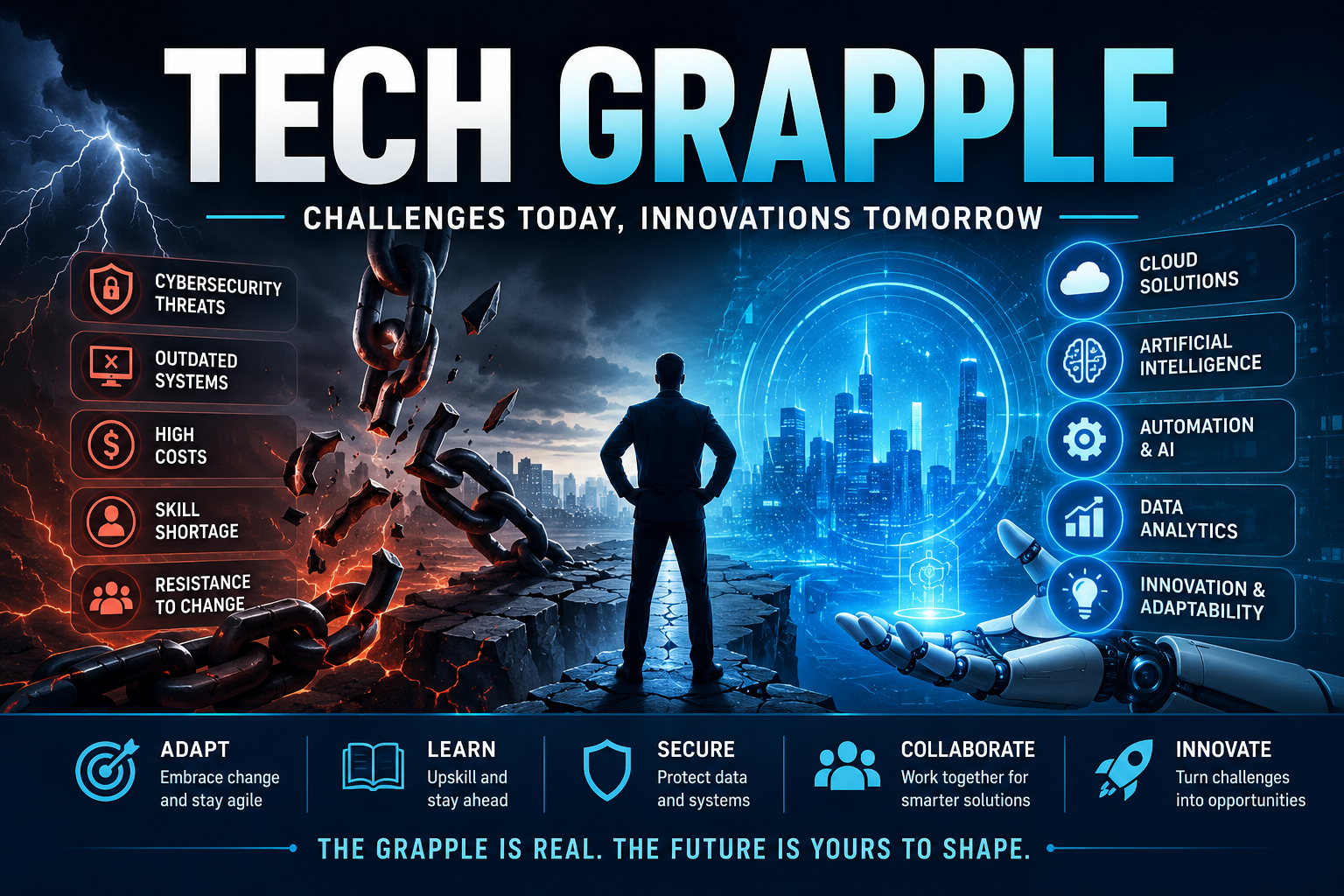
Technology continues to evolve at an incredible speed, transforming industries, businesses, and everyday life. However, with rapid innovation comes a range of challenges, competition, and adaptation struggles. The term Tech Grapple represents the ongoing battle organizations, industries, and individuals face while dealing with technological change, digital transformation, and emerging innovations.
As businesses race toward modernization, they often grapple with new tools, changing consumer expectations, cybersecurity threats, and the pressure to remain competitive. Understanding Tech Grapple helps organizations prepare for technological disruptions and navigate the evolving digital landscape successfully.
What Is Tech Grapple?
Tech Grapple refers to the challenges, struggles, and strategic efforts associated with adopting, managing, and adapting to technological advancements. It symbolizes the process of balancing innovation with practical implementation.
In today’s fast-moving digital world, companies are not only trying to adopt new technologies but are also working to overcome obstacles such as high costs, integration issues, employee training, and security concerns.
The concept reflects how technology can create opportunities while simultaneously presenting difficulties.
Why Technology Challenges Continue Growing
Technological advancement has become a necessity rather than a choice.
Several factors contribute to modern Tech Grapple situations:
- Rapid innovation cycles
- Changing customer expectations
- Cybersecurity risks
- Artificial intelligence expansion
- Automation challenges
- Data privacy regulations
- Skill shortages
- Digital transformation costs
As technology evolves faster than organizational structures, many businesses struggle to keep pace.
The Digital Transformation Challenge
One of the biggest examples of Tech Grapple is digital transformation.
Many companies still rely on traditional systems and outdated processes. Transitioning toward modern digital infrastructure can be complex and expensive.
Common transformation challenges include:
Resistance to Change
Employees often become comfortable with existing workflows. Introducing new software or systems can create uncertainty and resistance.
Legacy System Problems
Older systems may not easily integrate with newer technologies.
Budget Constraints
Advanced technology investments can require significant financial resources.
Lack of Technical Skills
Organizations frequently face talent shortages in areas such as cloud computing, artificial intelligence, and cybersecurity.
Successful digital transformation requires both technological and cultural adaptation.
Artificial Intelligence and Tech Grapple
Artificial intelligence has become one of the most transformative innovations in modern history.
Businesses are increasingly implementing AI technologies for:
- Customer service automation
- Data analysis
- predictive insights
- Content recommendations
- Process optimization
While AI creates efficiency, organizations also grapple with challenges such as:
- Ethical concerns
- Job displacement fears
- Data accuracy issues
- AI bias
- Privacy questions
The debate surrounding artificial intelligence illustrates how innovation often creates new complexities.
Cybersecurity: A Growing Battlefield
As digital systems expand, cybersecurity has become a central Tech Grapple issue.
Organizations increasingly face threats including:
Data Breaches
Sensitive information can become vulnerable to cyberattacks.
Ransomware Attacks
Cybercriminals may lock systems and demand payments.
Phishing Scams
Employees can unintentionally expose organizations to security risks.
Identity Theft
Personal and corporate information remains a major target.
Businesses must continuously invest in cybersecurity strategies to protect their systems and maintain trust.
The Rise of Cloud Technology
Cloud computing changed how organizations manage infrastructure and data storage.
Benefits include:
- Flexibility
- Scalability
- Cost efficiency
- Remote accessibility
- Improved collaboration
However, moving to cloud-based systems can create challenges:
- Migration complexity
- Security concerns
- Downtime risks
- Compliance issues
- Vendor dependency
Companies often grapple with selecting the right cloud strategy while maintaining operational stability.
Remote Work and Technology Adaptation
The rise of remote work accelerated digital transformation globally.
Organizations rapidly adopted:
- Video conferencing tools
- Project management platforms
- Collaboration software
- Cloud services
- Virtual communication systems
- Digital fatigue
- Communication barriers
- Security vulnerabilities
- Employee engagement issues
Tech Grapple in remote environments continues to shape workplace strategies.
The Human Side of Technology
Technology discussions often focus on systems and software, but human adaptation remains equally important.
Employees must continuously learn new skills to remain competitive.
Essential skills now include:
- Digital literacy
- Problem-solving
- Data interpretation
- Technical communication
- Adaptability
Organizations that invest in education and workforce development often handle technological transitions more effectively.
Startups and Innovation Challenges
Startups frequently face intense Tech Grapple situations.
Young technology companies must navigate:
- Limited funding
- Market competition
- Product development pressure
- Scaling difficulties
- Talent acquisition challenges
Despite obstacles, startups often become major innovation drivers because they can adapt faster than larger organizations.
Future Trends Shaping Tech Grapple
Technology continues evolving, creating new opportunities and challenges.
Emerging trends include:
Artificial Intelligence Expansion
AI capabilities are expected to become increasingly advanced.
Internet of Things (IoT)
Connected devices will continue reshaping industries.
Quantum Computing
Future computing systems may dramatically increase processing power.
Blockchain Technology
Secure and decentralized systems could transform digital transactions.
Extended Reality
Virtual and augmented experiences may redefine communication and entertainment.
These developments may create the next generation of technological struggles and opportunities.
How Businesses Can Overcome Tech Grapple
Organizations can reduce technology challenges through proactive strategies:
Continuous Learning
Encourage employee training and development.
Strong Cybersecurity Planning
Invest in security measures and awareness programs.
Flexible Infrastructure
Adopt scalable systems capable of adapting to change.
Strategic Planning
Align technological investments with business goals.
Innovation Culture
Support experimentation and creative problem-solving.
Companies that embrace adaptability often outperform competitors during periods of technological change.
Conclusion
Tech Grapple represents the ongoing challenge of balancing innovation with practical implementation. As technology rapidly evolves, organizations and individuals must continually adapt to changing systems, emerging tools, and shifting expectations.
Although technological struggles can seem overwhelming, they also create opportunities for growth, efficiency, and transformation. Businesses that approach innovation strategically can turn challenges into competitive advantages.
The future of technology will likely bring even greater disruption, making adaptability and continuous learning essential for long-term success.Technology continues to evolve at an incredible speed, transforming industries, businesses, and everyday life. However, with rapid innovation comes a range of challenges, competition, and adaptation struggles. The term Tech Grapple represents the ongoing battle organizations, industries, and individuals face while dealing with technological change, digital transformation, and emerging innovations.
As businesses race toward modernization, they often grapple with new tools, changing consumer expectations, cybersecurity threats, and the pressure to remain competitive. Understanding Tech Grapple helps organizations prepare for technological disruptions and navigate the evolving digital landscape successfully.