

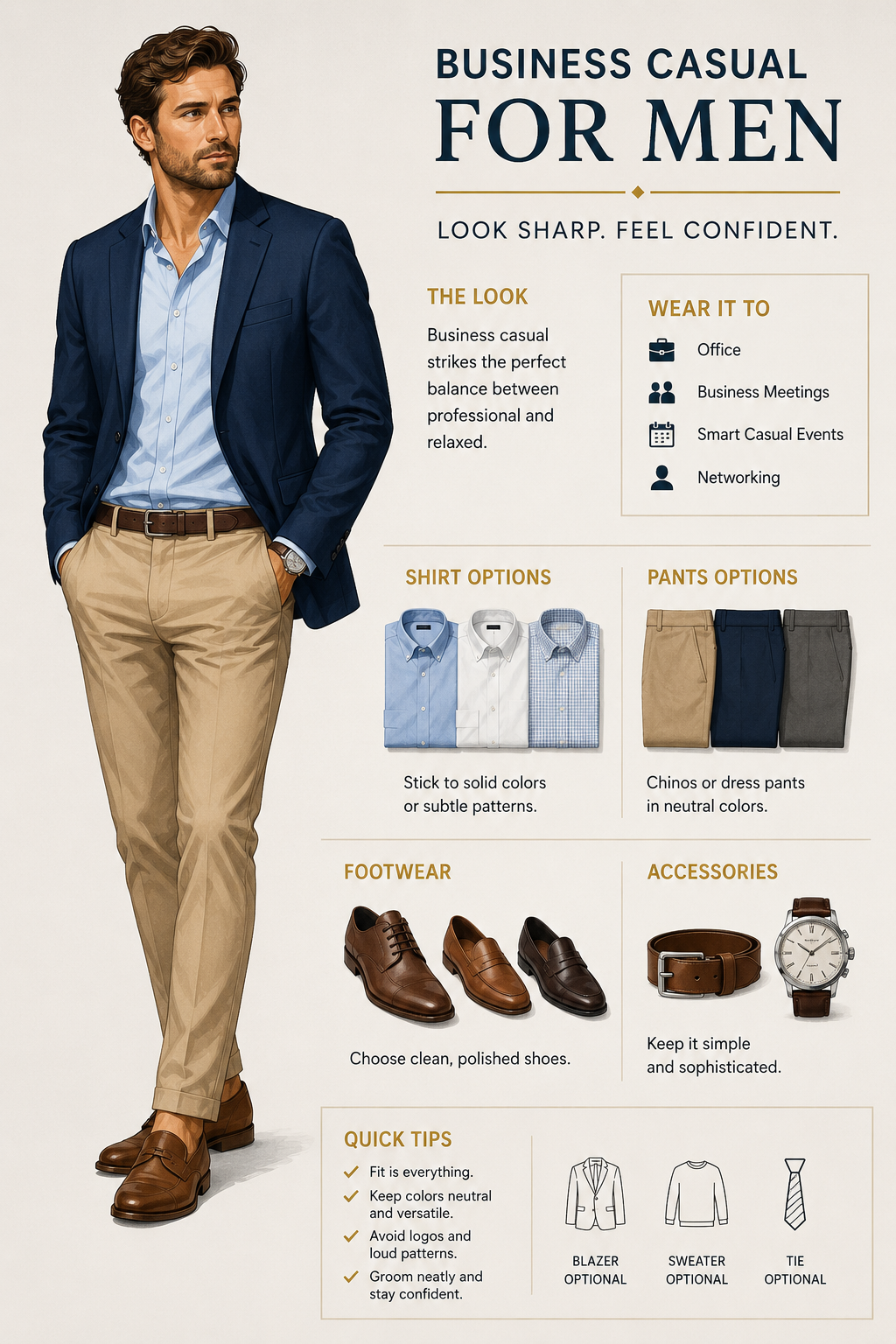
Business casual for men has become one of the most popular dress styles in modern workplaces. It creates the perfect balance between formal office wear and relaxed everyday fashion. Unlike traditional business attire that often requires full suits and ties, business casual offers flexibility while maintaining a polished and professional appearance.
Understanding business casual can help men dress appropriately for work, meetings, networking events, and even social gatherings. In this guide, we’ll explore what business casual means, essential wardrobe pieces, styling tips, and common mistakes to avoid.
What Is Business Casual for Men?
Business casual is a dress code that combines professional clothing with comfortable and less formal elements. It sits between a strict corporate suit-and-tie look and casual clothing such as jeans and T-shirts.
The goal of business casual attire is to appear neat, stylish, and professional without looking overly formal.
Examples of business casual clothing include:
- Button-down shirts
- Polo shirts
- Chinos
- Dress pants
- Blazers
- Loafers
- Sweaters
- Clean leather shoes
The exact definition of business casual can vary depending on the workplace culture and industry.
Essential Business Casual Wardrobe Pieces
Creating a business casual wardrobe starts with investing in versatile basics.
1. Dress Shirts
Button-down shirts are a foundation of business casual style. Neutral colors work best because they match easily with different outfits.
Popular options include:
- White
- Light blue
- Gray
- Navy
- Subtle stripes
- Small check patterns
A well-fitted shirt instantly creates a more refined appearance.
2. Polo Shirts
In less formal environments, polo shirts can replace dress shirts. Choose solid colors and avoid oversized logos or loud graphics.
Polos work especially well during warm weather and can be paired with chinos or dress pants.
3. Chinos
Chinos are among the most important business casual items for men. They provide comfort while looking cleaner than jeans.
Popular chino colors include:
- Khaki
- Navy
- Olive
- Gray
- Beige
Slim or tailored fits usually create the best appearance.
4. Dress Pants
Dress trousers offer a more polished business casual look. Wool-blend pants or tailored slacks work well for meetings and office environments.
Avoid overly baggy styles.
5. Blazers
A blazer instantly upgrades a business casual outfit.
Navy blazers are particularly versatile because they pair with:
- Chinos
- Dress pants
- Button-down shirts
- Sweaters
You can wear a blazer without a tie for a modern business casual style.
6. Sweaters and Layering Pieces
During cooler seasons, sweaters add sophistication and comfort.
Popular choices include:
- Crew-neck sweaters
- V-neck sweaters
- Quarter-zip pullovers
- Cardigans
Layering a sweater over a collared shirt creates a stylish office look.
Best Shoes for Business Casual Men
Shoes significantly affect the overall impression of an outfit.
Suitable options include:
- Loafers
- Oxford shoes
- Derby shoes
- Chelsea boots
- Leather sneakers (minimal designs)
Footwear should always be clean and well-maintained.
Business Casual Outfit Ideas for Men
Classic Office Look
- Light blue button-down shirt
- Navy chinos
- Brown loafers
- Leather belt
Smart Layered Style
- White dress shirt
- Gray sweater
- Dark chinos
- Chelsea boots
Relaxed Professional Look
- Polo shirt
- Beige chinos
- Leather sneakers
Meeting Day Outfit
- White shirt
- Navy blazer
- Gray trousers
- Brown dress shoes
These combinations create a polished appearance suitable for many professional settings.
Business Casual Colors That Work Best
Color coordination matters when dressing business casual.
Safe and stylish color combinations include:
- Navy and white
- Gray and blue
- Beige and black
- Olive and white
- Brown and navy
Neutral tones are easier to mix and create a professional appearance.
Common Business Casual Mistakes
Many men misunderstand business casual and accidentally dress too casually.
Avoid these mistakes:
Wearing Graphic T-Shirts
T-shirts with large logos or graphics usually look too casual for professional settings.
Choosing Distressed Jeans
Ripped or faded jeans rarely fit business casual standards.
Wearing Athletic Shoes
Running shoes and gym sneakers can undermine an otherwise polished outfit.
Ignoring Fit
Even expensive clothing looks unprofessional if it fits poorly.
Tailored clothing creates a more confident appearance.
Overusing Accessories
Keep accessories simple:
- Watch
- Leather belt
- Minimal bracelet
Too many accessories can distract from a clean professional style.
Seasonal Business Casual Tips
Summer
Choose breathable materials such as:
- Cotton
- Linen blends
- Lightweight fabrics
Lighter colors also work well during hot weather.
Winter
Layer outfits using:
- Sweaters
- Wool coats
- Jackets
- Scarves
Stick to darker seasonal colors like charcoal and navy.
Why Business Casual Matters
First impressions often influence opportunities in both professional and social environments. Dressing appropriately demonstrates confidence, attention to detail, and respect for workplace culture.
Business casual gives men the ability to express personal style while remaining polished and professional.
Final Thoughts
Business casual for men is about achieving a balance between comfort and professionalism. Building a wardrobe with versatile shirts, chinos, blazers, and quality shoes makes dressing easier and more effective. By understanding the fundamentals and avoiding common mistakes, men can confidently create stylish business casual outfits for almost any occasion.
As workplaces continue to evolve, mastering business casual style remains an essential skill for modern professionals.