

Introduction
The term logisths is gaining attention across different fields, especially in discussions related to systems, organization, and structured processes. While it may appear unfamiliar at first, understanding logisths can help you better grasp how complex systems are managed and optimized in today’s fast-moving world.
This article explores the meaning of logisths, its possible interpretations, applications, and why it matters.
What Does Logisths Mean?
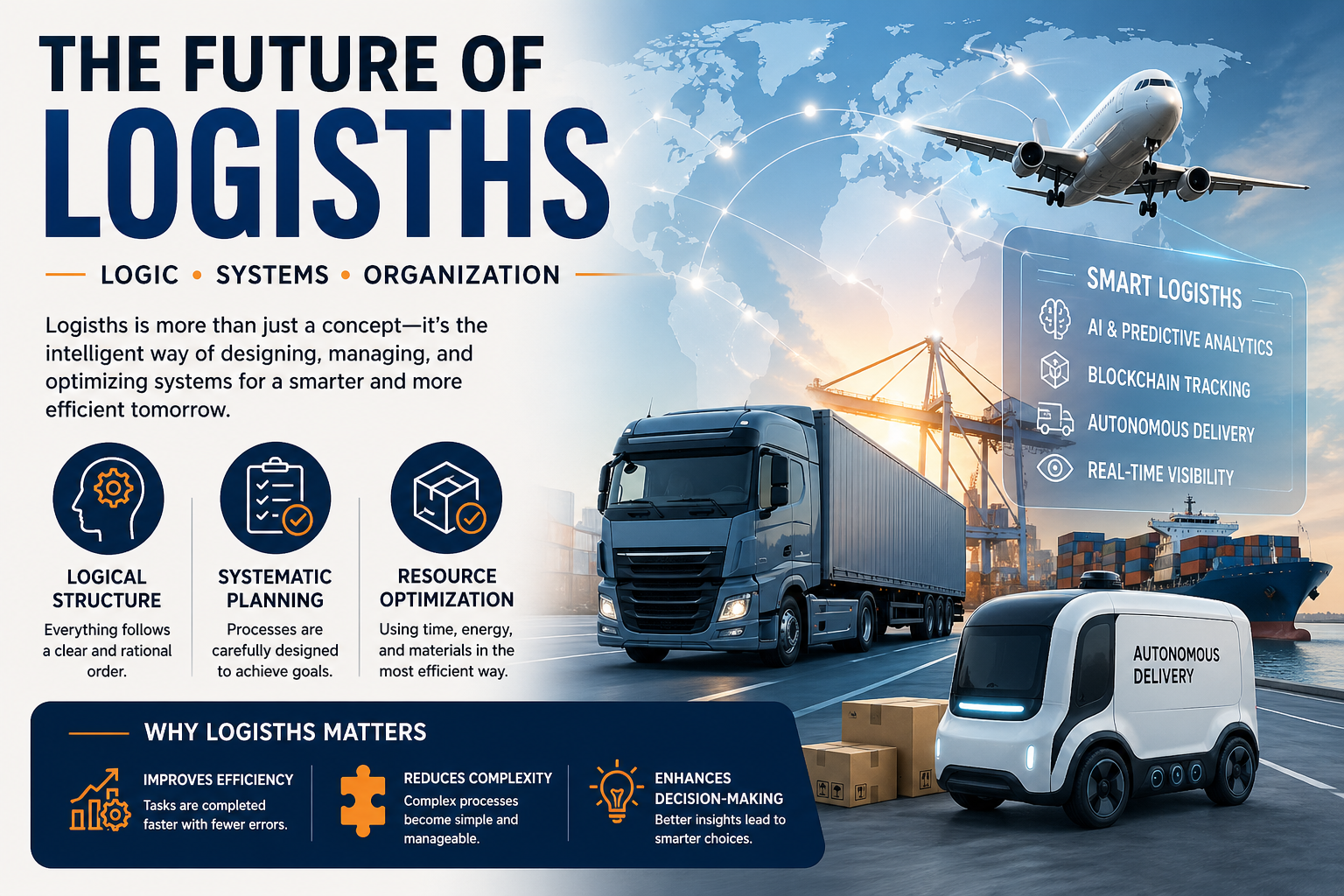
“Logisths” is not a widely standardized term, but it appears to be derived from concepts related to logistics, logic, or systematic organization. In most contexts, it refers to:
- Structured planning and coordination
- Efficient management of resources
- Logical organization of processes
In simple terms, logisths can be understood as a concept that combines logic + systems + organization.
The Core Concept Behind Logisths
At its core, logisths revolves around three main ideas:
1. Logical Structure
Everything within a system follows a clear and rational order. This ensures efficiency and reduces confusion.
2. Systematic Planning
Processes are not random—they are carefully designed and optimized to achieve specific goals.
3. Resource Optimization
Time, energy, and materials are used in the most efficient way possible.
Applications of Logisths
1. Business and Operations
In business environments, logisths can relate to:
- Supply chain management
- Inventory control
- Workflow optimization
Companies use these principles to reduce costs and improve productivity.
2. Technology and Software
In tech, logisths may apply to:
- Algorithm design
- Data organization
- System architecture
Efficient systems rely heavily on logical structuring—one of the key ideas behind logisths.
3. Everyday Life
Even daily routines can reflect logisths:
- Planning your schedule
- Organizing tasks
- Managing time effectively
Using structured thinking helps people stay productive and less stressed.
Why Logisths Is Important
Improves Efficiency
When systems are well-organized, tasks are completed faster and with fewer errors.
Reduces Complexity
Breaking down complex processes into logical steps makes them easier to understand.
Enhances Decision-Making
Clear structure allows for better analysis and smarter choices.
Logisths vs Logistics
Although the terms sound similar, they are slightly different:
| Aspect | Logisths | Logistics |
|---|---|---|
| Focus | Conceptual and logical systems | Physical movement of goods |
| Scope | Broad and theoretical | Practical and operational |
| Use | Systems, planning, logic | Transportation and supply |
Logisths can be seen as a broader conceptual foundation, while logistics is a specific application.
Future of Logisths
As industries become more complex and data-driven, the importance of structured systems will continue to grow. Logisths-like thinking is becoming essential in:
- Artificial intelligence
- Automation
- Smart cities
- Digital transformation
Understanding and applying these principles will be valuable in almost every field.
Conclusion
Logisths represents the idea of combining logic, structure, and organization to improve efficiency and clarity. Whether in business, technology, or daily life, its principles help create systems that are easier to manage and more effective.
As the world continues to evolve, adopting logisths-based thinking can provide a strong foundation for solving complex problems and achieving better outcomes.